Hernia Surgery

Hernia Surgery

Why Does My Hernia Hurt More at Night?

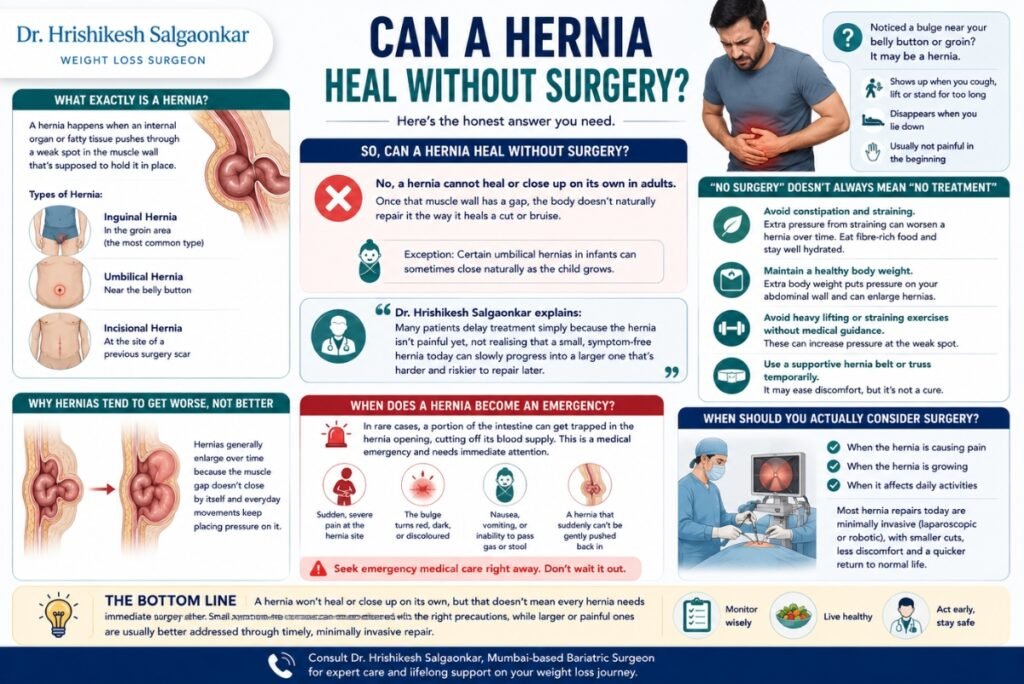
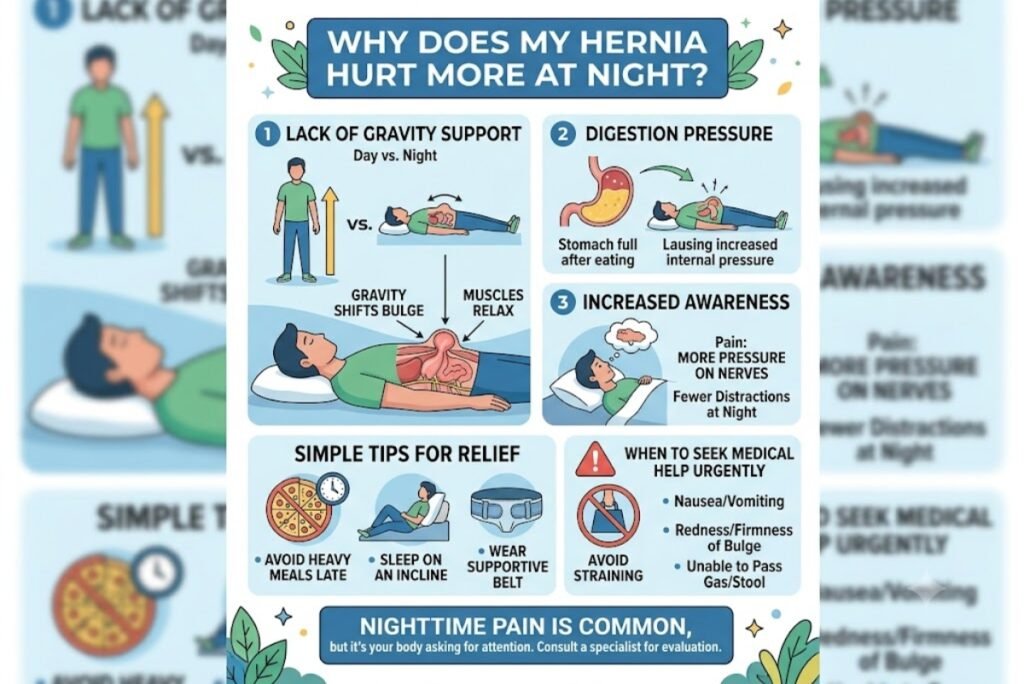
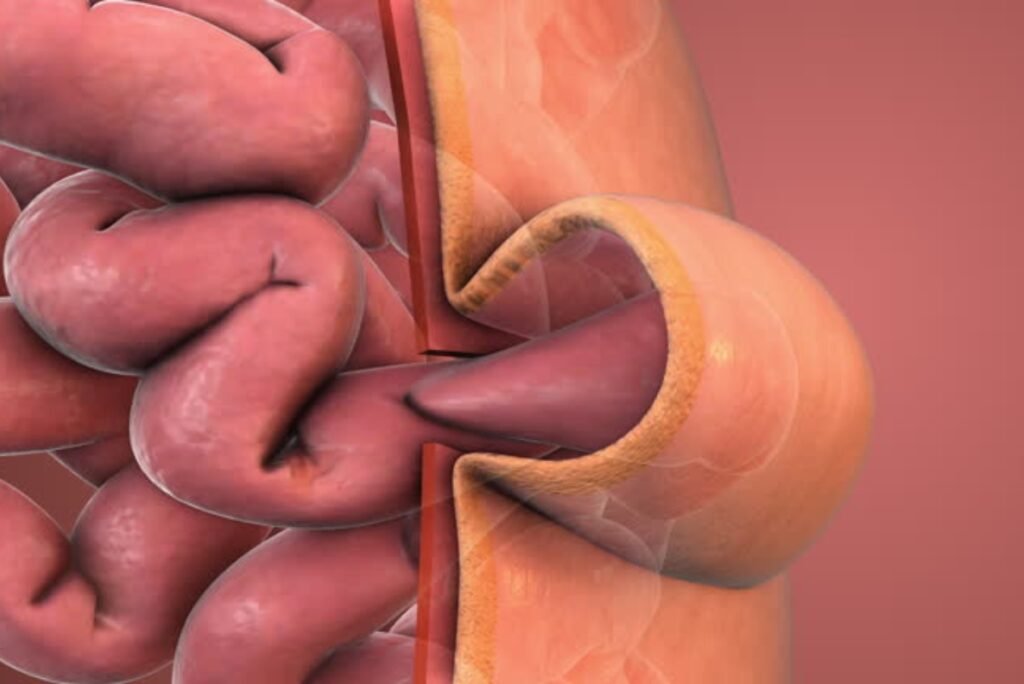
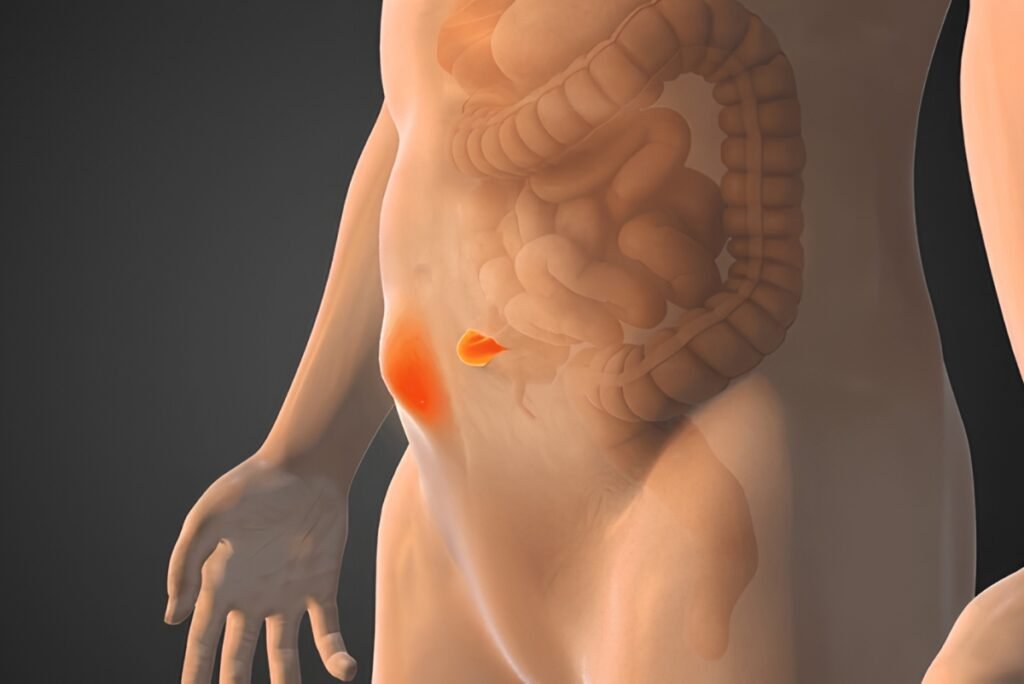
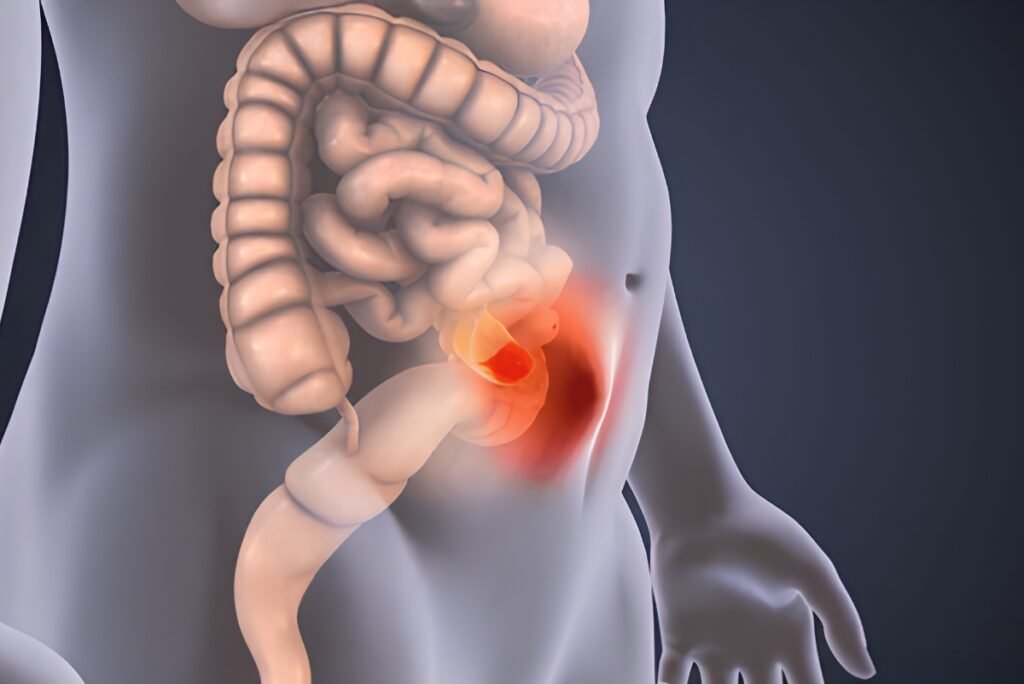
Why Does My Hernia Hurt More at Night? Introduction If you’ve ever tossed and turned because of a nagging ache near your belly or groin, you’re not imagining it. Many people with a hernia notice the same pattern: the pain feels manageable during the day but flares up the moment they lie down to sleep. It’s a common complaint, and there’s a simple, logical explanation behind it. First, What Exactly Is a Hernia? In plain words, a hernia happens when an internal part of your body, usually a bit of intestine or fatty tissue, pushes through a weak spot in the surrounding muscle wall. Think of it like a small bulge poking through a tear in a bag.It’s most common in the abdomen or groin area, and it can happen to anyone, though it’s more frequent in people who lift heavy weights, have chronic coughs, or have had previous surgeries. So Why Does It Hurt More at Night? Here’s where things get interesting. During the day, gravity actually works in your favor. When you’re standing or sitting upright, it helps keep the bulge in place or partly pushed back in. But at night, when you lie flat, that support disappears. A few things happen once you lie down: Gravity stops helping. Lying flat can let the bulge shift or press against nearby nerves and tissue, which can trigger discomfort. Muscles relax. Your abdominal muscles loosen up during rest, which can allow more pressure on the weak spot. You’re more aware of it. During the day, you’re distracted by work, chores, and conversations. At night, with fewer distractions, even mild discomfort feels more noticeable. Digestion plays a role. Lying down soon after a meal can increase pressure in the abdomen, especially if the hernia is closer to the stomach area. Seeing your hernia feel more noticeable at night doesn’t automatically mean it’s getting worse. As any experienced hernia surgeon would explain, your body’s position can change how much pressure is placed on the weakened area. Simple Things That Might Help While these tips won’t fix a hernia (only proper treatment can do that), they may ease nighttime discomfort: Avoid heavy meals late in the evening — this reduces pressure on your abdomen while you sleep. Try sleeping on your back with a slight incline — using an extra pillow can reduce pressure in some cases. Wear a supportive hernia belt if your doctor recommends one — it can offer gentle support during rest. Avoid straining before bed — skip late-night heavy lifting or intense exercise. Don’t ignore a persistent cough — coughing repeatedly increases pressure on the area. When Should You Worry? Occasional discomfort at night is common, but certain signs need prompt medical attention: Sudden, sharp, or worsening pain The bulge turning red, dark, or unusually firm Nausea, vomiting, or inability to pass gas or stool The bulge no longer goes back in when you gently press or lie down These could indicate a trapped hernia, which needs urgent medical care. It’s rare, but it’s important to know the warning signs. When Should You See a Specialist? If night-time pain has become a regular part of your routine, it’s worth getting it checked rather than living with it. A hernia doesn’t heal on its own, and over time, the same weak spot can widen. Getting an early opinion from a hernia surgeon in Mumbai can help you understand whether you need simple lifestyle changes, monitoring, or a minor surgical repair. Modern hernia repairs are usually quick, minimally invasive, and have a smooth recovery, so there’s no reason to feel anxious about seeking advice early. According to Dr. Hrishikesh Salgaonkar, most patients are surprised at how straightforward diagnosis and treatment can be once they stop delaying the visit. Early evaluation, he notes, is usually far simpler than dealing with complications later. The Bottom Line Night-time hernia pain is common and usually explained by gravity, muscle relaxation, and reduced distraction, not necessarily a sign that things are getting worse. Still, it’s your body’s way of asking for attention. Listening to it, making a few lifestyle adjustments, and consulting a specialist when needed can save you a lot of discomfort down the road.

Hernia Surgery

How Long Until I Feel Normal After Hernia Surgery?

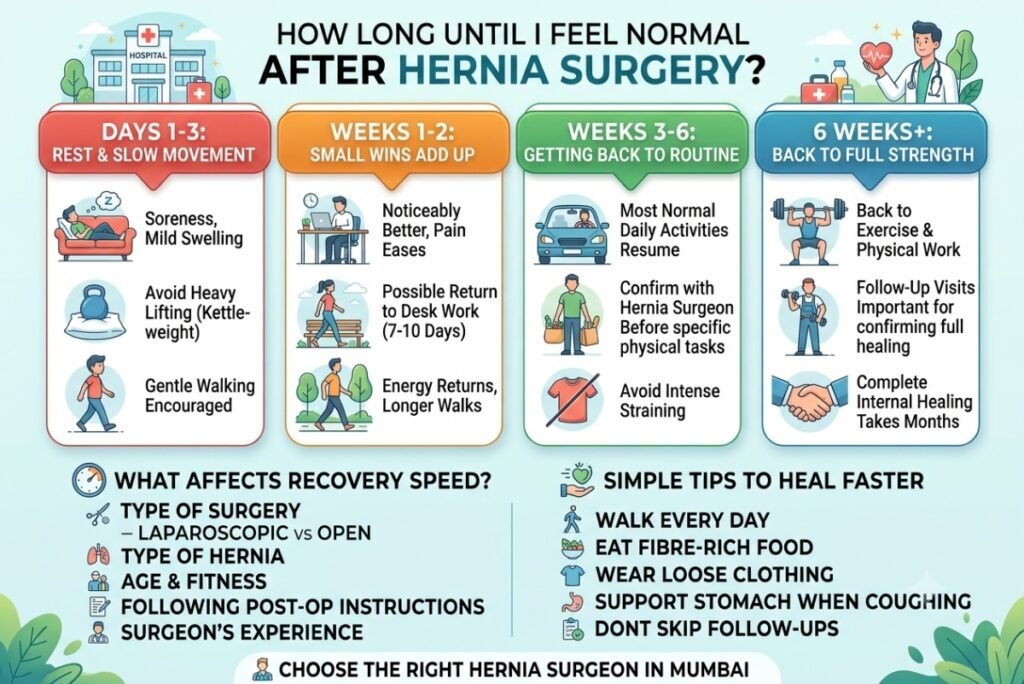
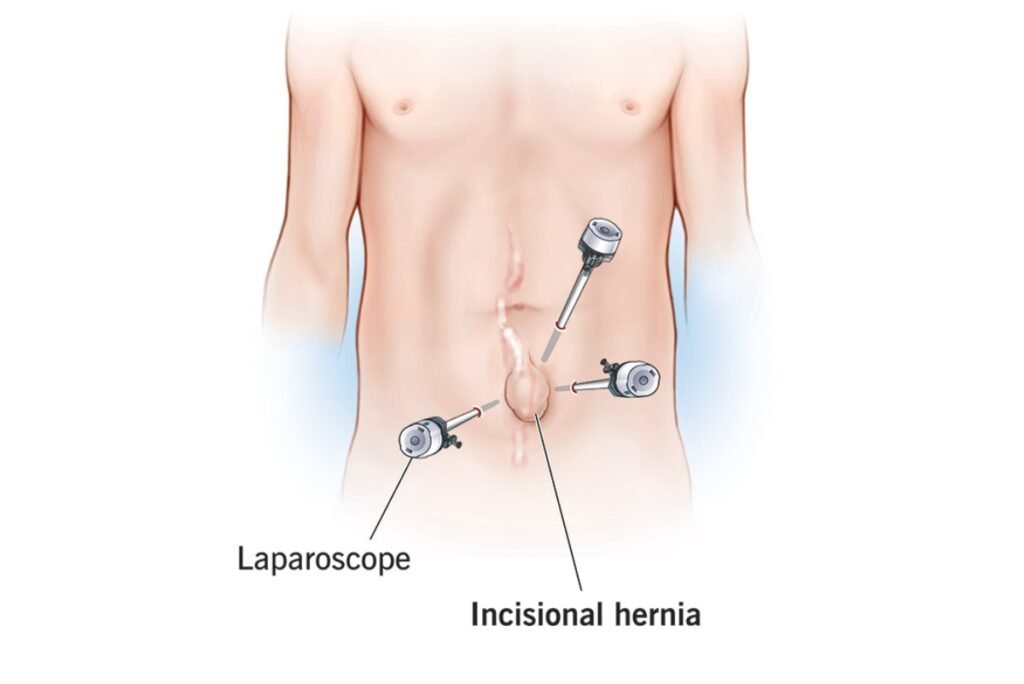
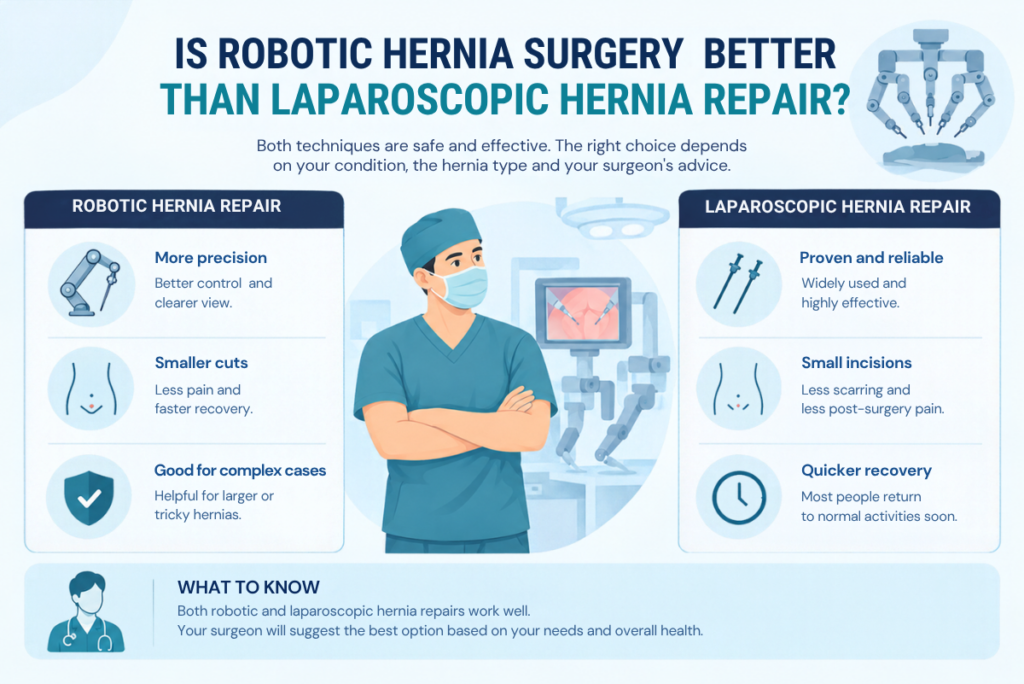
How Long Until I Feel Normal After Hernia Surgery? Introduction If you’ve just had hernia surgery, or you’re getting ready for one, there’s a good chance one question is sitting at the back of your mind: when will I actually feel like myself again? The honest answer: recovery isn’t identical for everyone, but there’s a general pattern most patients follow, and knowing it makes the whole process feel a lot less confusing. What Exactly Happens During Hernia Surgery? A hernia happens when an internal part of your body, usually an intestine or fatty tissue, pushes through a weak spot in your abdominal muscles. Surgery pushes everything back into place and reinforces that weak spot, often with a small mesh patch to stop it from recurring. Most hernia surgeons in Mumbai today use the laparoscopic method, a few tiny cuts instead of one big incision, usually meaning less pain and quicker recovery than open surgery. Your surgeon decides which approach suits you based on the hernia’s size, type, and your overall health. The First Few Days: Take It Slow Right after surgery, your body needs rest more than anything else. Expect some soreness, mild swelling, and tiredness — this is completely normal, not a sign that something’s wrong. Most people can walk around the house within a day, and that’s actually encouraged; gentle movement helps blood flow and lowers complication risk. Just avoid lifting anything heavier than a kettle, bending forcefully, or straining at this stage. Week One to Two: Small Wins Add Up By the end of the first week, many patients feel noticeably better, pain eases, energy returns, and short walks get easier. Some go back to desk-based work within 7 to 10 days, especially after laparoscopic surgery. This is also where patience matters most. You might feel “almost fine” and want to push harder; resist that urge. Your internal tissues are still healing even if you don’t feel much on the outside. Three to Six Weeks: Getting Back to Routine This is usually when life starts feeling close to normal. Driving, light chores, and longer walks are generally fine by now, though it’s wise to confirm with your hernia surgeon before resuming activities specific to your job or lifestyle. If your work involves heavy lifting, intense gym sessions, or physically demanding tasks, give it the full six weeks before jumping back in. Six Weeks and Beyond: Back to Full Strength By the six-week mark, most people are back to their full routine, including exercise and manual work. Complete internal healing, though, can take a few months — which is why follow-up visits matter. Your surgeon can confirm the repair has held up before you go all-in on strenuous activity. What Affects Your Recovery Timeline? Recovery speed isn’t random. A few things play a role: Type of surgery – Laparoscopic hernia surgery tends to heal faster than open surgery. Type of hernia – Inguinal (groin) and umbilical (belly button) hernias recover at different paces. Age and fitness – Fitter patients generally bounce back quicker. Following post-op instructions – Matters more than people realise. Surgeon’s experience – A skilled hernia surgeon shapes both the outcome and how smooth your recovery feels. Simple Tips to Help You Heal Faster Walk a little every day, even if it’s just around your home. Eat fibre-rich food to avoid straining during bathroom visits. Wear loose, comfortable clothing. Support your stomach with a pillow when coughing or laughing. Don’t skip your follow-up appointments. Finding the Right Hernia Surgeon in Mumbai Recovery isn’t just about what you do at home, it starts with choosing the right hernia surgeon in the first place. Look for someone experienced in both open and laparoscopic techniques. You trust surgeons like Dr. Hrishikesh Salgaonkar are a good benchmark for the kind of expertise to look for. A good surgeon won’t just operate well; they’ll guide you through every stage of healing. What This Really Means for You Feeling “normal” again after hernia surgery doesn’t happen overnight, but it does happen, usually in stages, over a few weeks to a couple of months. Be patient with your body, follow your surgeon’s advice, and celebrate the small wins along the way.

Hernia Surgery

How to Prepare for Hernia Surgery – What to Do Before, During & After

How to Prepare for Hernia Surgery – What to Do Before, During & After Introduction So your doctor has recommended hernia surgery. You may be feeling a mix of relief — finally, a solution — and nervousness about what comes next. That is completely normal. The good news is that hernia surgery today, especially when performed laparoscopically, is a well-established, safe procedure with a high success rate and quick recovery time. But how well you prepare before, during, and after plays a huge role in how smoothly everything goes. Here is your complete, easy-to-follow guide. Why Proper Preparation Matters Before Hernia Surgery Preparing for surgery is not just about showing up on the scheduled day. Good preparation can help: Reduce surgical risks Support faster recovery Minimize complications Improve overall treatment outcomes Following your surgeon’s instructions carefully is one of the most important steps toward a successful post-operative recovery. Before Surgery: How to Prepare Yourself Attend Your Medical EvaluationBefore surgery, your doctor may recommend blood tests, imaging scans, or other evaluations to understand your overall health. This helps determine the safest treatment approach. Discuss Medications with Your DoctorCertain medications, including blood thinners and some supplements, may need to be adjusted before surgery. Always inform your surgeon about any medicines you are currently taking. Follow Diet InstructionsYou may be advised to avoid eating or drinking for several hours before the procedure. Following these instructions carefully is essential for a safe surgery. Avoid Smoking and AlcoholSmoking can slow wound healing and increase the risk of complications. Reducing or stopping smoking before surgery can positively impact recovery. Plan for Recovery at HomeArrange transportation, stock up on essential supplies, and ensure you have support available during the first few days after surgery. During Surgery: What to Expect on the Day It is done using advanced surgical procedures in most cases, which leads to faster recovery and less post-surgical pain for the patient. The following steps summarize the process of a bariatric procedure: General Anesthesia Administration : During bariatric surgery, the patient is given general anesthesia. It means you’ll be asleep while your doctor performs the operation and feel no pain. Small Cuts Are MadeIn contrast to one big cut, the surgeon makes several small ones on your abdomen, leading to quicker recovery. The Stomach’s Volume ReductionAs part of the procedure, your surgeon adjusts the stomach volume or shape to reduce food intake and calorie assimilation. This step is vital to achieving long-lasting results. Surgery LengthGenerally, such a procedure lasts from one to three hours, depending on its complexity and nature. Post-operative CareAfter completing the surgery, patients stay under supervision in the hospital. Doctors monitor them, treat pain, and provide guidelines on how to lead a lifestyle after the treatment. After Surgery: Recovery Tips for a Smooth Healing The post-surgery phase is where most of the healing happens — and where patients can make the biggest difference in their own recovery. The First Week     Rest as much as possible for the first 24 to 48 hours — your body needs it     Take all prescribed medications, including pain relief and antibiotics, as directed     Keep the incision site clean and dry — follow your surgeon’s wound care instructions     Begin short, gentle walks from Day 2 onwards to prevent blood clots and aid digestion     Avoid straining, lifting, or any sudden physical effort completely   Weeks Two to Four     Gradually increase walking distance and light activity as you feel comfortable     Eat a fibre-rich diet and stay hydrated to avoid constipation — straining is one of the main causes of recurrence     Avoid driving until your surgeon gives you the green light     Most patients can return to desk jobs within one to two weeks     Heavy lifting and strenuous exercise should be avoided for at least four to six weeks Before Surgery   During Surgery   After Surgery Fast for 8–10 hours before surgery You will be under anaesthesia — stay calm Rest completely for the first 24–48 hours Stop blood thinners as advised by the doctor Wear comfortable, loose clothing to the hospital Avoid lifting anything heavier than 5 kg Complete all pre-op blood tests & scans Remove jewellery, nail polish, and contact lenses Take all prescribed medicines on time Arrange a responsible adult to take you home Inform the team of any last-minute symptoms Attend all follow-up appointments Quit smoking at least 2 weeks prior Trust your surgical team completely Eat light, fibre-rich meals to avoid constipation Prepare a recovery area at home in advance Stay hydrated the night before, as advised Walk short distances daily from Day 2 onwards Why Choosing an Experienced Hernia Surgeon Matters Surgery for a hernia not only requires surgical expertise but also proper diagnosis and aftercare. It is always better to consult a surgeon like Dr. Hrishikesh Salgaonkar, who will provide you with a personalized solution as per your requirements. He is known for Hernia Specialist in Mumbai and emphasizes the use of advanced surgical methods and personalized solutions for his patients. Important Things to Remember Preparing for hernia surgery is an important part of achieving the best possible outcome. Understanding what to do before, during, and after the procedure can help reduce anxiety and support a faster recovery. If you are planning hernia treatment or elsewhere in India, consulting an experienced specialist and following recovery guidelines carefully can make a significant difference. With expert guidance from Dr. Hrishikesh Salgaonkar, patients can approach surgery with greater confidence and focus on returning to a healthier, more active life. Life After Bariatric Surgery Bariatric surgery is just the beginning long-term success depends on lifestyle changes. After surgery, patients need to: Follow a healthy, portion-controlled diet  Stay physically active Take prescribed supplements Attend regular follow-ups Most patients experience not just weight loss, but a complete improvement in their health and confidence. Why the Choice of Surgeon Is Important The choice of a good surgeon is one of

Hernia Surgery

Can a Hernia Come Back After Surgery? Everything You Need to Know

Can a Hernia Come Back After Surgery? Everything You Need to Know Introduction One of the most common concerns patients have before undergoing hernia surgery is, “Can my hernia come back again?” It’s a valid question. After all, surgery is meant to fix the problem, and nobody wants to experience the same discomfort twice. The good news is that modern hernia repair techniques are highly effective. However, like many medical conditions, there is still a possibility of recurrence in some cases. Understanding why a hernia may return and what steps can help reduce that risk can make a significant difference in your long-term recovery. If you’re considering treatment from the Leading Robotic Hernia Specialist, knowing the facts about hernia recurrence can help you make informed decisions about your health. What Exactly Is a Recurrent Hernia? A recurrent hernia happens when a hernia develops again at the same site where it was previously repaired. This can occur weeks, months, or even years after the original surgery. It is not a sign that the surgery completely failed — but it does mean the repaired area has weakened again and needs attention. Recurrence rates vary depending on the type of hernia, the technique used for repair, and, importantly, the experience of the surgeon performing the procedure. Can a Hernia Really Return After Surgery? Yes, a hernia can return after surgery, but the risk varies from patient to patient. Advances in surgical techniques, especially mesh repair and minimally invasive procedures, have significantly reduced recurrence rates. Most patients enjoy long-term relief after surgery. However, maintaining the repaired area requires proper healing and lifestyle adjustments. The body’s tissues continue to face daily stress from activities, weight fluctuations, and aging, which can sometimes contribute to recurrence. Why Do Some Hernias Come Back? Several factors can increase the chances of a hernia returning after surgery. Excess WeightCarrying excess body weight places additional pressure on the abdominal wall. Over time, this pressure can weaken the repaired area and increase the risk of recurrence. Heavy Lifting Too SoonReturning to strenuous activities before complete healing can place stress on the surgical repair and affect recovery. Chronic Cough or ConstipationConditions that repeatedly increase abdominal pressure, such as persistent coughing or straining during bowel movements, can contribute to hernia recurrence. SmokingSmoking can affect blood circulation and delay wound healing, which may impact the strength of tissue repair. Poor Tissue StrengthSome individuals naturally have weaker connective tissues, making them more prone to developing hernias and experiencing recurrence. How Do You Know If Your Hernia Has Come Back? The signs of a recurrent hernia are often similar to those of the original one. Watch out for:     A noticeable bulge or lump at or near the previous surgical site     A dull ache or sharp pain that worsens with coughing, bending, or lifting     A feeling of heaviness or dragging in the abdomen or groin     Nausea or discomfort after eating in some cases How to Reduce the Risk of Hernia Recurrence While not every recurrence can be prevented, there are several steps patients can take to lower their risk. Follow Post-Surgery Instructions CarefullyYour surgeon’s recovery guidelines are designed to protect the repaired area while it heals. Maintain a Healthy WeightManaging body weight helps reduce unnecessary strain on the abdominal muscles. Avoid Heavy Lifting During RecoveryGiving your body adequate time to heal is one of the most important parts of successful recovery. Stay Physically ActiveOnce cleared by your doctor, regular exercise can help strengthen core muscles and support overall health. Manage Chronic Health ConditionsTreating chronic cough, constipation, and other conditions that increase abdominal pressure can help protect the repair. Why Choosing the Right Surgeon Matters Successful hernia treatment starts with proper diagnosis, surgical expertise, and personalized post-operative care. An experienced surgeon understands how to minimize recurrence risks and guide patients through recovery effectively. Consulting a specialist like Dr. Hrishikesh Salgaonkar can provide patients with comprehensive treatment plans tailored to their specific condition. As the Best Hernia Surgeon in Mumbai, he focuses on advanced surgical techniques and patient-centered care to achieve long-term results and reduce the chances of recurrence. Important Things to Remember Although a hernia can return after surgery, recurrence is not inevitable. Modern surgical techniques, proper recovery, and healthy lifestyle habits significantly improve long-term outcomes. The key is to stay proactive about your recovery, follow medical advice, and seek timely evaluation if symptoms return. If you have concerns about a previous hernia repair or are considering surgery, consulting Dr. Hrishikesh Salgaonkar for expert hernia treatment can help you understand your options and take the right steps toward lasting relief.

Hernia Surgery

Signs Your Hernia Needs Immediate Surgery – Don’t Ignore These Warning Signs

Signs Your Hernia Needs Immediate Surgery – Don’t Ignore These Warning Signs Introduction People often do not pay attention to hernia symptoms at first because the pain is not that bad. They might feel a lump or some pain in their stomach and think it will go away. Hernias are not always harmless. If you wait too long to get help, you might have big problems that need emergency surgery. It is very important to know when a hernia is getting bad. If you get help early, you can avoid big problems and get better faster. If you have hernia symptoms that will not go away, getting the right treatment at the right time can make a big difference. Consulting the Best Hernia Surgeon in Mumbai can also give you the right guidance, personalized care, and support throughout your transformation journey. When Does a Hernia Become Dangerous? A hernia is really bad when the tissue that is sticking out gets stuck and cannot go back to its place. This can cut off the blood supply to the tissue that is affected, which can cause serious problems like a thing called a strangulated hernia. If you do not pay attention to the warning signs, you might have a chance of getting: Severe pain Something is blocking your intestines An infection Damage to the tissue Emergency surgical complications This is why you should go see a doctor anyway if your hernia symptoms start getting worse. A hernia can be very serious. It is important to take care of a hernia if you have one. Warning Signs Your Hernia May Need Immediate Surgery Abrupt and Severe Pain: While mild pain is normal in hernia cases, any instance of abrupt and severe pain should be noted since it can mean that the hernia is either trapped or strangulated. Swelling Turning Hard or Painful: Should the lump become hard, tender, and unmovable, it may mean that there is a problem with blood circulation. Nausea and Vomiting: In conjunction with the symptoms of hernia, nausea and vomiting may be an indication of bowel obstruction. Skin Redness and Discoloration: Any change in the color of the skin surrounding the affected area can be indicative of inflammation or strangulation. Presence of Fever with Abdominal Pain: When coupled with severe abdominal pain, fever can indicate infection or tissue damage. Difficulty Passing Gas or Stool: If the intestine becomes trapped inside the hernia, it may block normal bowel movement and become a medical emergency. Why Delaying Hernia Surgery Can Be Risky Many patients keep doing their activities and ignore the symptoms, thinking the pain will go away on its own. Unfortunately, hernias do not get better naturally. Can get bigger over time. Delaying treatment can increase: Risk of emergency surgery Surgical complexity Recovery time Chances of recurrence That is why it is always recommended to consult a hernia surgeon early, before things get complicated. Modern Treatment Options for Hernia The treatment depends on the type and how severe the hernia is. In cases where symptoms show up, surgery is the best solution. Modern procedures like laparoscopic surgery, which is a minimally invasive method, offer: Smaller cuts Less pain after surgery Faster recovery Lower risk of complications If you are looking for expert care, you should consult a hernia surgeon in Mumbai who knows how to handle both simple and complex hernia cases. When Should You Consult a Specialist? You should consult a doctor immediately if: Pain suddenly worsens The bulge becomes hard or swollen You develop vomiting or fever Daily activities become uncomfortable Early diagnosis helps prevent complications and improves treatment outcomes. Consulting an experienced specialist like Dr. Hrishikesh Salgaonkar can help patients receive accurate evaluation and personalized treatment planning based on their condition. Why Choosing the Right Hernia Surgeon Matters Hernia treatment is not about fixing the problem area. It is also about reducing the risk of it happening and making sure you recover safely. The way the surgery is done depends on the patient. How they are taken care of after the surgery all affects how well you do in the long run. If you are looking for care, choosing a surgeon who knows what they are doing can make your recovery easier and better. Important Things to Remember A hernia can start as an issue, but if you ignore the signs, guns it can get serious. If you have pain that does not go away, feel sick to your stomach, have swelling, or have problems with digestion, you should get help. Getting care on time can help you avoid big problems and make your recovery safer. If you have symptoms of a hernia, you should see Dr. Hrishikesh Salgaonkar. He can check you out. Give you good advice. This can help you do what is best for you to feel better for a time and be healthier.

Hernia Surgery

Recovery After Hernia Surgery: Tips and Timeline for Patients in India

Recovery After Hernia Surgery: Tips and Timeline for Patients in India Introduction Hernia surgery can relieve years of suffering and pain. However, once the surgery is completed, most people wonder, “When will my body recover, and how should I proceed?”Are you currently at this stage? There is no need to panic. In most cases, postoperative recovery after a hernia surgery is relatively easy if the necessary measures are taken. With the help of a proficient surgeon, such as Dr. Hrishikesh Salgaonkar, who is the best hernia surgeon in Mumbai, you will find that recovery time is shorter than you might expect. What to Expect After Hernia Surgery Following the operation for a hernia, it is very natural to have some pain or discomfort at the surgical site. The process of recovery from surgery involves such changes as part of the healing process.However, it must be said that the course of recovery depends on the type of operation conducted. Thus, if the surgery was performed using an open procedure, then it will take some time; whereas, the laparoscopic procedure will ensure rapid recovery and minimal pain on the part of the patient.With the help of modern techniques, it becomes possible to experience a rather pleasant process of recovery. For instance, if a patient picks up an experienced doctor, such as a Robotic Hernia Surgeon in Mumbai, this will have a beneficial effect on the process of recovery.In any event, following the doctor’s instructions and having proper rest will be the key things to do. Recovery Process: What to Expect Following Hernia Surgery (Day 1 to Week 6) Recovering from hernia surgery occurs through different phases. Knowing about them will make your recovery process easier. Days 1-3 (Initial Recovery Period)There is some discomfort, which is a common experience during recovery. Doctors advise rest and taking walks to aid the process. Week 1-2 (Early Recovery Phase)Pain decreases, and you can do some light tasks daily. You should not lift heavy weights at this stage. Week 3-4 (Mid-Stage Recovery)The majority of people get better during this period. You can easily move around and carry out some of your usual duties. Week 5-6 (Final Recovery Phase)Now, you can start engaging in your regular activities. The process will be completed shortly after week 6. Key Tips for Quick Recovery Some tips may be considered to speed up the process of recovery.1. Stay Active but not Overly : Walking will aid in better circulation and will prevent stiffness. This must be started slowly and incrementally. 2. Follow the Indian Diet Scheme : Consume nutritious food items, including:Dal, Roti, and Vegetables, Fiber-rich Fruits, A lot of liquidsOily and greasy foods need to be avoided as they cause constipation, which adds extra pressure to the wounds. 3. Do Not Lift Heavier Objects : This is amongst the most important steps one must take care of. Lifting heavier objects will only result in delaying the process or giving rise to complications. 4. Ensure Adequate Care for the Wounds : Keep the wounds clean and dry to avoid infections. This needs to be followed according to the instructions provided by the doctor. 5. Participate in Follow-Ups : It is advisable to visit follow-ups regardless of how well one feels. Common Mistakes to Avoid After Hernia Surgery Many patients unknowingly slow down their recovery by making small mistakes, such as: Starting gym or heavy work too early  Ignoring pain or discomfort Not following dietary advice Skipping doctor visits Avoiding these mistakes can make your recovery much smoother When Should You Call Your Doctor? While most patients recover without issues, you should contact your doctor if you notice: Severe or increasing pain Fever Redness or swelling Any unusual discharge from the wound Early attention can prevent complications and ensure safe healing. Why Choosing the Right Surgeon is Important Your recovery does not depend only on what happens after the operation; you need to choose a good surgeon first. Having an experienced specialist who, for instance, has been chosen among the Best Hernia Surgeons in India, will help you have: Less pain Rapid recovery Fewer risks of having complications So, if you want to get the Robotic Hernia Surgery in India done successfully, you should find an experienced surgeon. Conclusion Hernia surgery is generally less complex and less time consuming than other types of surgery; if you exercise proper care and allow adequate healing time, your recovery should be faster than anticipated. You can return to your daily life safely in as little as four weeks with the help of good quality care, proper health habits, and an experienced physician such as Dr. Hrishikesh Salgaonkar.The initial phase of your recovery from hernia surgery will involve seeing a skilled surgeon for additional information about how to make a successful transition back to your everyday life.

Scroll to Top