
How Long Until I Feel Normal After Hernia Surgery?
Introduction
If you’ve just had hernia surgery, or you’re getting ready for one, there’s a good chance one question is sitting at the back of your mind: when will I actually feel like myself again?
The honest answer: recovery isn’t identical for everyone, but there’s a general pattern most patients follow, and knowing it makes the whole process feel a lot less confusing.
What Exactly Happens During Hernia Surgery?
A hernia happens when an internal part of your body, usually an intestine or fatty tissue, pushes through a weak spot in your abdominal muscles. Surgery pushes everything back into place and reinforces that weak spot, often with a small mesh patch to stop it from recurring.
Most hernia surgeons in Mumbai today use the laparoscopic method, a few tiny cuts instead of one big incision, usually meaning less pain and quicker recovery than open surgery. Your surgeon decides which approach suits you based on the hernia’s size, type, and your overall health.
The First Few Days: Take It Slow
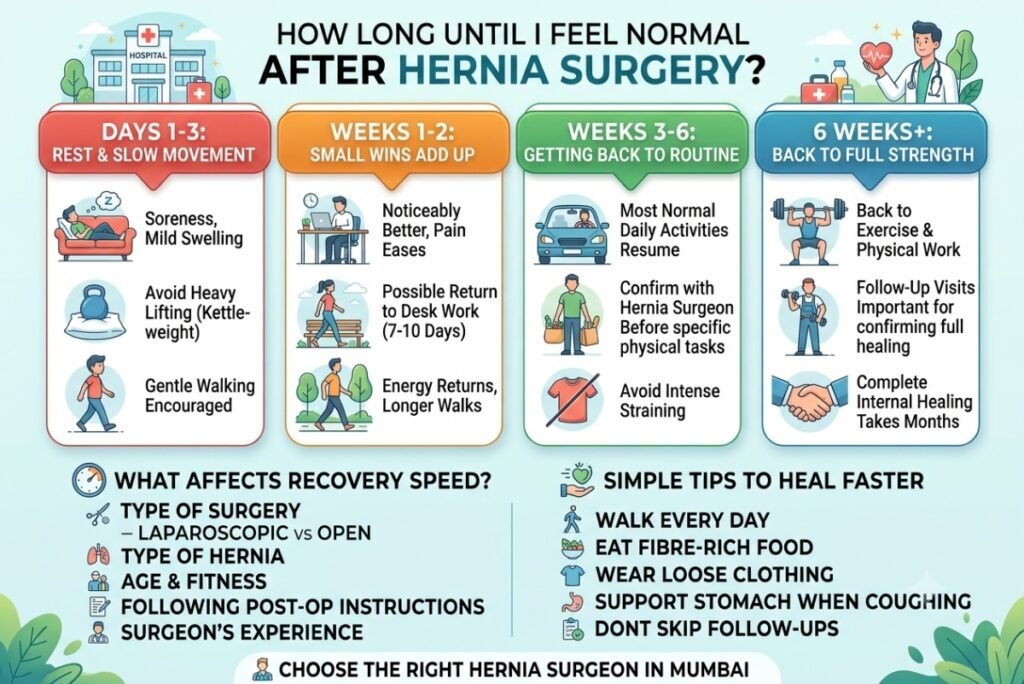
Right after surgery, your body needs rest more than anything else. Expect some soreness, mild swelling, and tiredness — this is completely normal, not a sign that something’s wrong.
Most people can walk around the house within a day, and that’s actually encouraged; gentle movement helps blood flow and lowers complication risk. Just avoid lifting anything heavier than a kettle, bending forcefully, or straining at this stage.
Week One to Two: Small Wins Add Up
By the end of the first week, many patients feel noticeably better, pain eases, energy returns, and short walks get easier. Some go back to desk-based work within 7 to 10 days, especially after laparoscopic surgery.
This is also where patience matters most. You might feel “almost fine” and want to push harder; resist that urge. Your internal tissues are still healing even if you don’t feel much on the outside.
Three to Six Weeks: Getting Back to Routine
This is usually when life starts feeling close to normal. Driving, light chores, and longer walks are generally fine by now, though it’s wise to confirm with your hernia surgeon before resuming activities specific to your job or lifestyle.
If your work involves heavy lifting, intense gym sessions, or physically demanding tasks, give it the full six weeks before jumping back in.
Six Weeks and Beyond: Back to Full Strength
By the six-week mark, most people are back to their full routine, including exercise and manual work. Complete internal healing, though, can take a few months — which is why follow-up visits matter. Your surgeon can confirm the repair has held up before you go all-in on strenuous activity.
What Affects Your Recovery Timeline?
Recovery speed isn’t random. A few things play a role:
- Type of surgery – Laparoscopic hernia surgery tends to heal faster than open surgery.
- Type of hernia – Inguinal (groin) and umbilical (belly button) hernias recover at different paces.
- Age and fitness – Fitter patients generally bounce back quicker.
- Following post-op instructions – Matters more than people realise.
- Surgeon’s experience – A skilled hernia surgeon shapes both the outcome and how smooth your recovery feels.
Simple Tips to Help You Heal Faster
- Walk a little every day, even if it’s just around your home.
- Eat fibre-rich food to avoid straining during bathroom visits.
- Wear loose, comfortable clothing.
- Support your stomach with a pillow when coughing or laughing.
- Don’t skip your follow-up appointments.
Finding the Right Hernia Surgeon in Mumbai
Recovery isn’t just about what you do at home, it starts with choosing the right hernia surgeon in the first place. Look for someone experienced in both open and laparoscopic techniques. You trust surgeons like Dr. Hrishikesh Salgaonkar are a good benchmark for the kind of expertise to look for. A good surgeon won’t just operate well; they’ll guide you through every stage of healing.
What This Really Means for You
Feeling “normal” again after hernia surgery doesn’t happen overnight, but it does happen, usually in stages, over a few weeks to a couple of months. Be patient with your body, follow your surgeon’s advice, and celebrate the small wins along the way.