Do All Gallstones Need Surgery or Can They Be Treated With Medication?
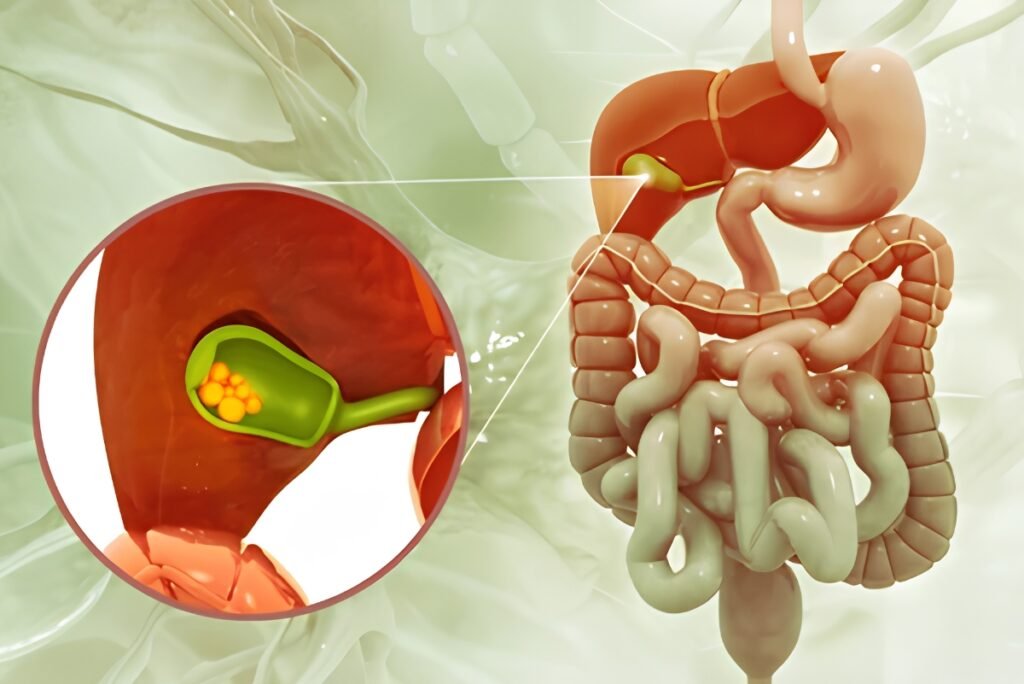
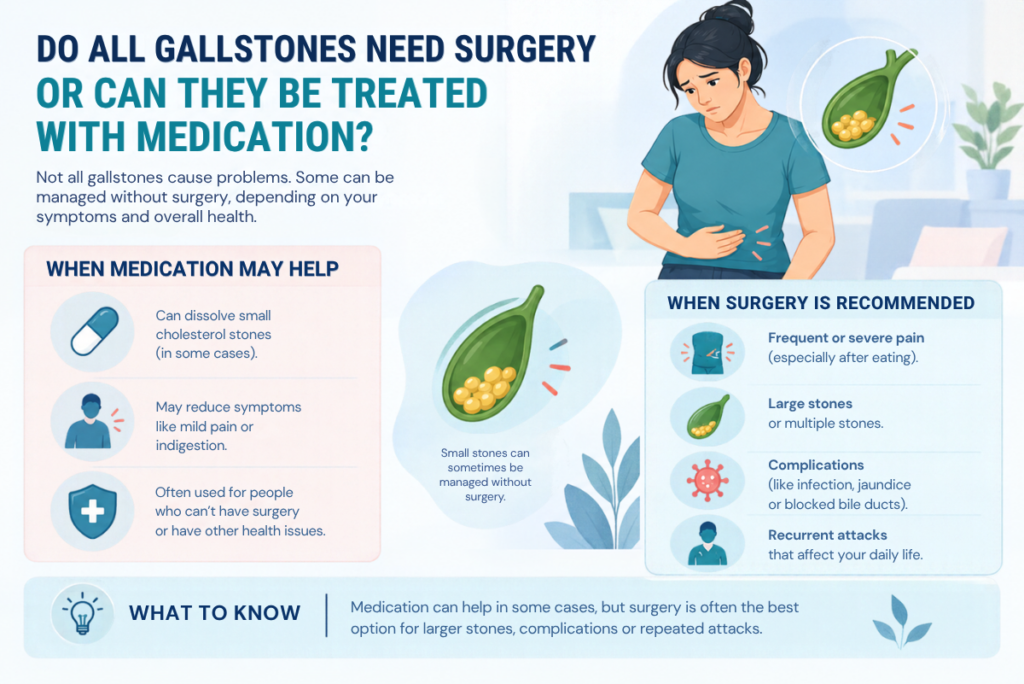
Do All Gallstones Need Surgery or Can They Be Treated With Medication? Introduction Finding out you have gallstones often comes as a surprise; many people discover them during a routine scan for something completely unrelated. The first question that follows is almost always the same: do I need surgery, or can this be managed with medication instead? The honest answer is, it depends on the stones, your symptoms, and a few other factors. Here’s a clear breakdown of when Gallstone Surgery in Mumbai actually becomes necessary, and when it doesn’t. What Are Gallstones Your gallbladder stores bile, a fluid that helps digest fat. Sometimes, substances in bile, mainly cholesterol or bilirubin, harden into small stone-like deposits. These can range from as tiny as a grain of sand to as large as a golf ball, and a person can have just one or several at a time. When Gallstones Don’t Need Treatment at All Here’s something that surprises a lot of people: not every gallstone needs to be removed. Silent gallstones – If stones are found incidentally and you have no symptoms, doctors often recommend simply monitoring them rather than jumping into treatment. No pain, no complications – As long as the stones aren’t causing blockages, inflammation, or recurring pain, a “watch and wait” approach is usually reasonable. Lifestyle adjustments help some people – Maintaining a healthy weight and a balanced, lower-fat diet can reduce the chances of stones causing trouble later. When Medication Might Help Medication does exist for gallstones, but it comes with real limitations worth knowing upfront: Oral dissolution therapy – Certain medicines, like ursodeoxycholic acid, can slowly dissolve small cholesterol stones over months, sometimes even years. Only works for specific stone types – Medication is largely ineffective against larger stones, pigment stones, or stones that are already causing symptoms. High recurrence rate – Even when medication works, stones frequently come back once treatment stops, since the underlying tendency to form them doesn’t go away. Dr Hrishikesh Salgaonkar often points out that medication is rarely offered as a primary solution precisely because of this, it’s slow, it’s limited to a narrow set of cases, and the results don’t always hold up long-term. When Surgery Becomes the Better Option Surgery tends to move from “optional” to “recommended” once any of these show up: Recurring pain – Repeated episodes of sharp abdominal pain, especially after fatty meals, known as biliary colic. Blocked bile duct – When a stone moves and blocks the duct, it can cause jaundice or serious infection. Gallbladder inflammation – Known as cholecystitis, this causes persistent pain, fever, and tenderness, and usually needs prompt treatment. Pancreatitis risk – Stones that slip into the pancreatic duct can trigger inflammation of the pancreas, which is a more serious complication. Once any of these patterns appear, surgery usually resolves the problem permanently, rather than just managing symptoms as they recur. What Does Gallbladder Surgery Actually Involve The standard procedure is called a laparoscopic cholecystectomy, essentially removing the gallbladder through a few small incisions using a camera and thin instruments. Most people are surprised by how routine this surgery has become: it’s typically done in under an hour, and many patients go home within a day or two. Talking It Through With Your Doctor Since every case genuinely differs, it helps to ask direct questions during your consultation: Are my stones causing symptoms, or were they found incidentally? Would medication realistically work for my specific stones, or is it unlikely to help? What happens if I choose to just monitor them for now? What does recovery actually look like after gallbladder removal? Dr Hrishikesh Salgaonkar generally recommends getting a clear answer to these before deciding either way, since the right choice really does come down to your individual situation rather than a one-size-fits-all rule. The Bottom Line Not every gallstone demands immediate action, but not every case is safe to simply wait out either. Medication has a narrow, specific role, while surgery remains the more dependable long-term fix once symptoms or complications appear. If you’re trying to figure out whether Gallstone Surgery is the right next step for you, a proper evaluation with Dr Hrishikesh Salgaonkar can help you move forward with a clear, confident decision.