What Is the 30/30 Rule for Bariatric Surgery?
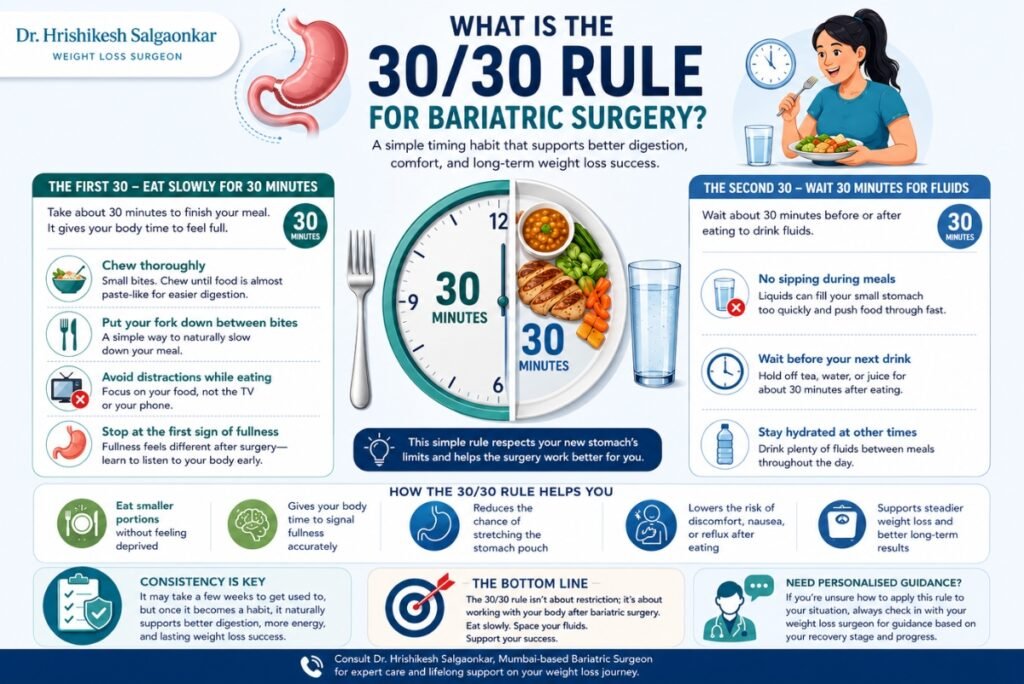
What Is the 30/30 Rule for Bariatric Surgery? Introduction If you’ve started researching life after bariatric surgery, chances are you’ve bumped into the term “30/30 rule” somewhere, maybe in a support group, a YouTube video, or during a consultation with your surgeon. It sounds a bit like a fitness fad, doesn’t it? But it’s actually one of the simplest, most practical habits that can make a real difference to your results after surgery. Let’s break it down in plain language. So, What Exactly Is the 30/30 Rule? The 30/30 rule has two parts, and both revolve around timing: Eat your meal slowly over about 30 minutes. Wait roughly 30 minutes before or after eating to drink fluids. That’s it. No complicated charts, no fancy calculations. Just a simple timing habit built around how your new stomach works after surgery. Why Does Timing Matter So Much After Surgery? After a Sleeve Gastrectomy or similar weight-loss surgery, your stomach becomes much smaller than before. It’s now working with a fraction of the space it used to have. Here’s the catch: if you drink water, tea, or any liquid too close to your meal, it fills up that limited space quickly. This can push food through faster, reduce how much you can comfortably eat, and, in some cases, cause discomfort or even vomiting. On the flip side, eating too fast doesn’t give your brain time to register that you’re full. It takes about 15–20 minutes for fullness signals to reach the brain, so wolfing down a meal in five minutes often leads to overeating before you even realise it. The 30/30 rule simply respects both of these realities. Breaking Down the “First 30” – Eating Slowly Chew thoroughly. Since your stomach is smaller and digestion has changed, food needs to be broken down well before it even reaches the stomach. Aim for smaller bites and chew until the food is almost paste-like. Put your fork down between bites. This sounds small, but it naturally slows the pace of the meal without much effort. Avoid distractions while eating. Eating in front of the TV or phone often leads to eating faster and past the point of fullness without you noticing. Stop at the first sign of fullness. After bariatric surgery, fullness can feel different; sometimes it’s a mild pressure rather than the “stuffed” feeling from before. Learning to recognise this early cue takes practice. Breaking Down the “Second 30” – Spacing Out Fluids No sipping during meals. It’s tempting, especially with Indian meals that often include dal, curries, or buttermilk. But liquids during meals can wash food through the stomach too quickly, leaving you hungry sooner. Wait before your next drink. After finishing a meal, try to hold off on tea, water, or juice for about 30 minutes. Stay hydrated at other times. This doesn’t mean cutting back on water overall hydration is still important. It simply means being intentional about when you drink, not how much over the day. Does the 30/30 Rule Actually Help With Weight Management? Yes, indirectly, and in a fairly logical way. By slowing down meals and spacing out fluids, you naturally: Eat smaller portions without feeling deprived Give your body time to signal fullness accurately Reduce the chances of stretching the stomach pouch over time Lower the risk of discomfort, nausea, or reflux after eating According to Dr Hrishikesh Salgaonkar, a Mumbai-based Bariatric Surgeon, patients who consistently follow the 30/30 rule in the months after surgery often report fewer digestive complaints and steadier weight loss progress compared to those who eat and drink without pacing themselves. It’s a small structural habit, but it supports the bigger picture, helping the surgery do what it’s meant to do. Is It Hard to Follow Long-Term? Honestly, it takes a bit of getting used to, especially in the first few weeks. Indian dining culture often revolves around sharing meals, chatting, and drinking water or chaas alongside food, so this habit does require a mindset shift. But most patients find that once it becomes routine, it stops feeling like a “rule” and simply becomes how they eat. It also tends to naturally support better digestion, more stable energy levels, and steadier results from surgery. The Bottom Line The 30/30 rule isn’t about restriction; it’s about working with your body after Bariatric Surgery, not against it. Eating slowly and spacing out fluids give your smaller stomach the time and space it needs to do its job well. If you’re unsure how to apply this rule to your specific situation, it’s always best to check in with your weight loss surgeon, who can guide you based on your recovery stage and progress.