
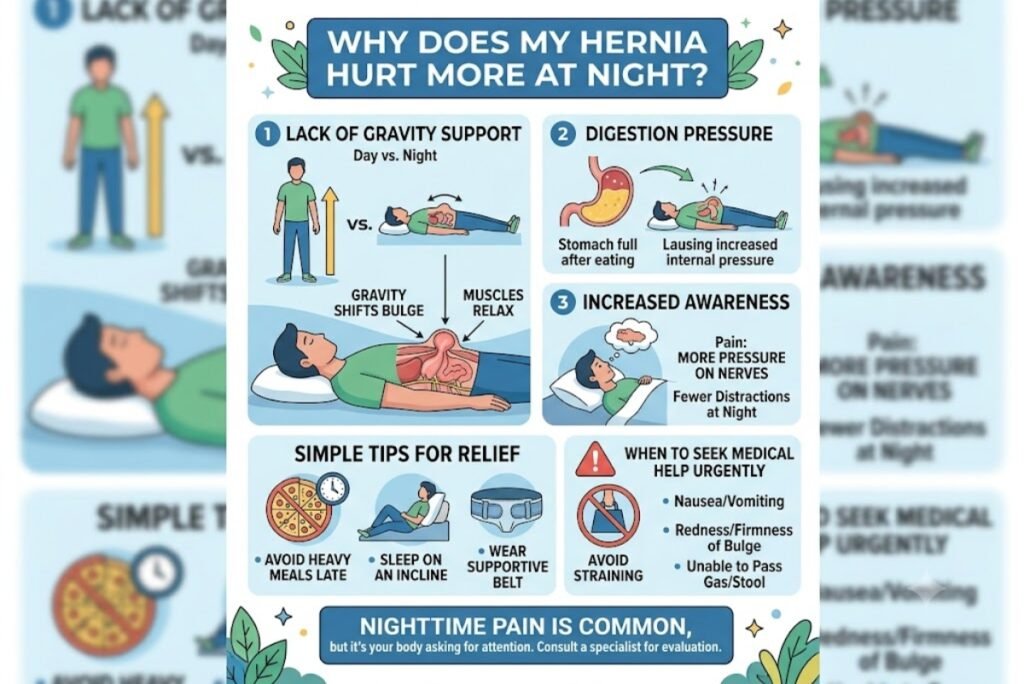
Why Does My Hernia Hurt More at Night?
Introduction
If you’ve ever tossed and turned because of a nagging ache near your belly or groin, you’re not imagining it. Many people with a hernia notice the same pattern: the pain feels manageable during the day but flares up the moment they lie down to sleep. It’s a common complaint, and there’s a simple, logical explanation behind it.
First, What Exactly Is a Hernia?
In plain words, a hernia happens when an internal part of your body, usually a bit of intestine or fatty tissue, pushes through a weak spot in the surrounding muscle wall. Think of it like a small bulge poking through a tear in a bag.
It’s most common in the abdomen or groin area, and it can happen to anyone, though it’s more frequent in people who lift heavy weights, have chronic coughs, or have had previous surgeries.
So Why Does It Hurt More at Night?
Here’s where things get interesting. During the day, gravity actually works in your favor. When you’re standing or sitting upright, it helps keep the bulge in place or partly pushed back in. But at night, when you lie flat, that support disappears.
A few things happen once you lie down:
- Gravity stops helping. Lying flat can let the bulge shift or press against nearby nerves and tissue, which can trigger discomfort.
- Muscles relax. Your abdominal muscles loosen up during rest, which can allow more pressure on the weak spot.
- You’re more aware of it. During the day, you’re distracted by work, chores, and conversations. At night, with fewer distractions, even mild discomfort feels more noticeable.
- Digestion plays a role. Lying down soon after a meal can increase pressure in the abdomen, especially if the hernia is closer to the stomach area.
Seeing your hernia feel more noticeable at night doesn’t automatically mean it’s getting worse. As any experienced hernia surgeon would explain, your body’s position can change how much pressure is placed on the weakened area.
Simple Things That Might Help
While these tips won’t fix a hernia (only proper treatment can do that), they may ease nighttime discomfort:
- Avoid heavy meals late in the evening — this reduces pressure on your abdomen while you sleep.
- Try sleeping on your back with a slight incline — using an extra pillow can reduce pressure in some cases.
- Wear a supportive hernia belt if your doctor recommends one — it can offer gentle support during rest.
- Avoid straining before bed — skip late-night heavy lifting or intense exercise.
- Don’t ignore a persistent cough — coughing repeatedly increases pressure on the area.
When Should You Worry?
Occasional discomfort at night is common, but certain signs need prompt medical attention:
- Sudden, sharp, or worsening pain
- The bulge turning red, dark, or unusually firm
- Nausea, vomiting, or inability to pass gas or stool
- The bulge no longer goes back in when you gently press or lie down
These could indicate a trapped hernia, which needs urgent medical care. It’s rare, but it’s important to know the warning signs.
When Should You See a Specialist?
If night-time pain has become a regular part of your routine, it’s worth getting it checked rather than living with it. A hernia doesn’t heal on its own, and over time, the same weak spot can widen. Getting an early opinion from a hernia surgeon in Mumbai can help you understand whether you need simple lifestyle changes, monitoring, or a minor surgical repair.
Modern hernia repairs are usually quick, minimally invasive, and have a smooth recovery, so there’s no reason to feel anxious about seeking advice early.
According to Dr. Hrishikesh Salgaonkar, most patients are surprised at how straightforward diagnosis and treatment can be once they stop delaying the visit. Early evaluation, he notes, is usually far simpler than dealing with complications later.
The Bottom Line
Night-time hernia pain is common and usually explained by gravity, muscle relaxation, and reduced distraction, not necessarily a sign that things are getting worse. Still, it’s your body’s way of asking for attention. Listening to it, making a few lifestyle adjustments, and consulting a specialist when needed can save you a lot of discomfort down the road.