
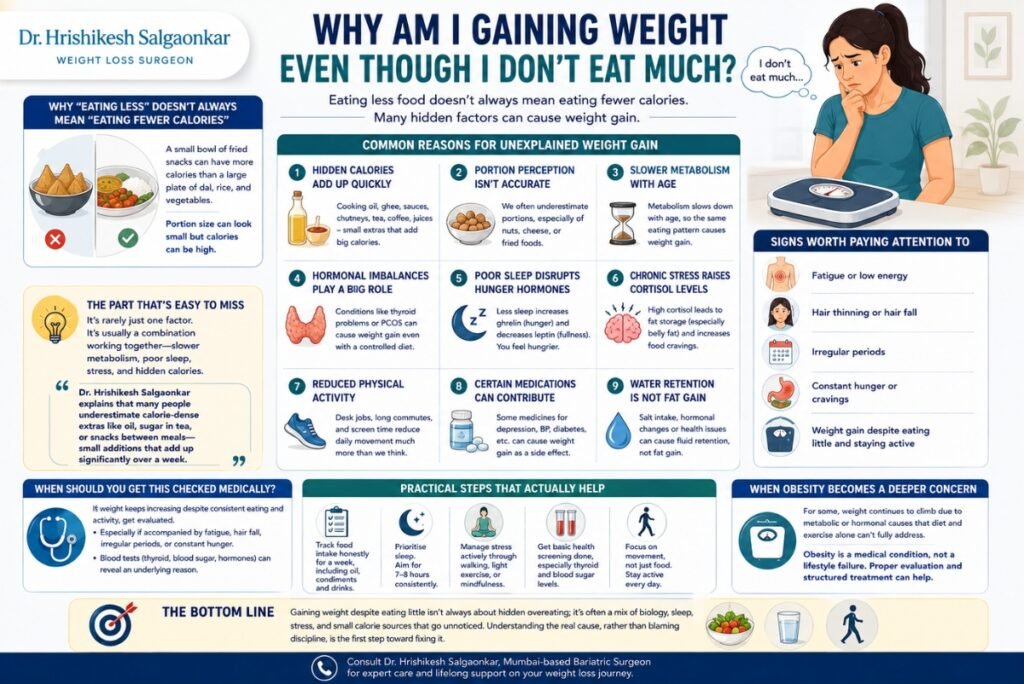
Why Am I Gaining Weight Even Though I Don't Eat Much?
Introduction
It’s one of the most common and confusing complaints people bring up around weight gain. And no, it’s usually not “all in your head.” There are real, explainable reasons why the number on the scale doesn’t always match how little you feel you’re eating.
Let’s go through them without any guilt or judgment.
Why "Eating Less" Doesn't Always Mean "Eating Fewer Calories"
This is the biggest misunderstanding. Eating less food isn’t the same as eating fewer calories.
A small bowl of fried snacks can carry more calories than a large plate of dal, rice, and vegetables. So the portion size can look small while the calorie count stays surprisingly high.
Common Reasons for Unexplained Weight Gain
- Hidden calories add up quickly: Cooking oil, ghee, sauces, chutneys, and beverages like tea, coffee, or juice often go uncounted, but they contribute a significant number of calories over the day.
- Portion perception isn’t always accurate: Eyeballing portions tends to underestimate quantity, especially with calorie-dense foods like nuts, cheese, or fried items. What feels like “a little” can be more than expected.
- Slower metabolism with age: Metabolism naturally slows down over the years. This means the same eating pattern that maintained your weight in your 20s can lead to gradual weight gain in your 30s and 40s.
- Hormonal imbalances play a bigger role than people realise: Conditions like an underactive thyroid or PCOS can cause weight gain even with a controlled diet, since they directly affect how the body stores and uses energy.
- Poor sleep disrupts hunger hormones: Inadequate sleep increases a hormone called ghrelin, which boosts hunger, and reduces leptin, which signals fullness. The result is that you feel hungrier and less satisfied, even if you’re technically eating less.
- Chronic stress raises cortisol levels: Elevated cortisol, the body’s main stress hormone, is linked to fat storage, especially around the abdomen, and can also increase cravings for sugary or fatty foods.
- Reduced physical activity: Desk jobs, long commutes, and screen-heavy routines mean daily movement is often far lower than people assume, even if diet hasn’t changed much.
- Certain medications can contribute to weight gain: Some medicines for conditions like depression, blood pressure, or diabetes list weight gain as a known side effect, which often gets overlooked as a cause.
- Water retention gets mistaken for fat gain: Sudden weight changes are sometimes due to fluid retention from salt intake, hormonal shifts, or certain health conditions, not actual fat.
The Part That's Easy to Miss
It’s rarely just one factor. Usually, it’s a combination, say, a slightly slower metabolism, disrupted sleep, and a bit of underestimated snacking, all quietly working together.
Dr. Hrishikesh Salgaonkar, many people who say “I hardly eat anything” are technically correct about meal size, but often underestimate calorie-dense extras like oil, sugar in tea, or fried snacks eaten between meals, small additions that add up significantly over a week.
When Should You Get This Checked Medically?
If weight keeps increasing despite genuinely consistent eating habits and activity levels, it’s worth getting evaluated rather than assuming it’s a discipline problem. This is especially true if it’s accompanied by fatigue, hair thinning, irregular periods, or constant hunger.
Blood tests to check thyroid function, blood sugar, and hormonal levels can often reveal an underlying reason that diet alone won’t fix.
Practical Steps That Actually Help
- Track food intake honestly for a week, including oil, condiments, and drinks, not just meals.
- Prioritise sleep, aiming for 7–8 hours consistently.
- Manage stress actively through activities like walking, light exercise, or simply stepping away from screens.
- Get basic health screening done, especially thyroid and blood sugar levels, if weight gain feels disproportionate to your eating habits.
- Focus on movement, not just food, since low daily activity is one of the most overlooked contributors to weight gain.
When Obesity Becomes a Deeper Concern
For some people, despite consistent effort, weight continues to climb due to underlying metabolic or hormonal causes that diet and exercise alone can’t fully address. In such cases, obesity isn’t a lifestyle failure; it’s a medical condition that benefits from proper evaluation and, where appropriate, structured treatment.
Dr. Hrishikesh Salgaonkar often explains that understanding the actual cause of weight gain rather than assuming it’s simply about willpower is usually the first real step toward sustainable, long-term results.
Gaining weight despite eating little isn’t always about hidden overeating; it’s often a mix of biology, sleep, stress, and small calorie sources that go unnoticed. Understanding the real cause, rather than blaming discipline, is the first step toward fixing it.