
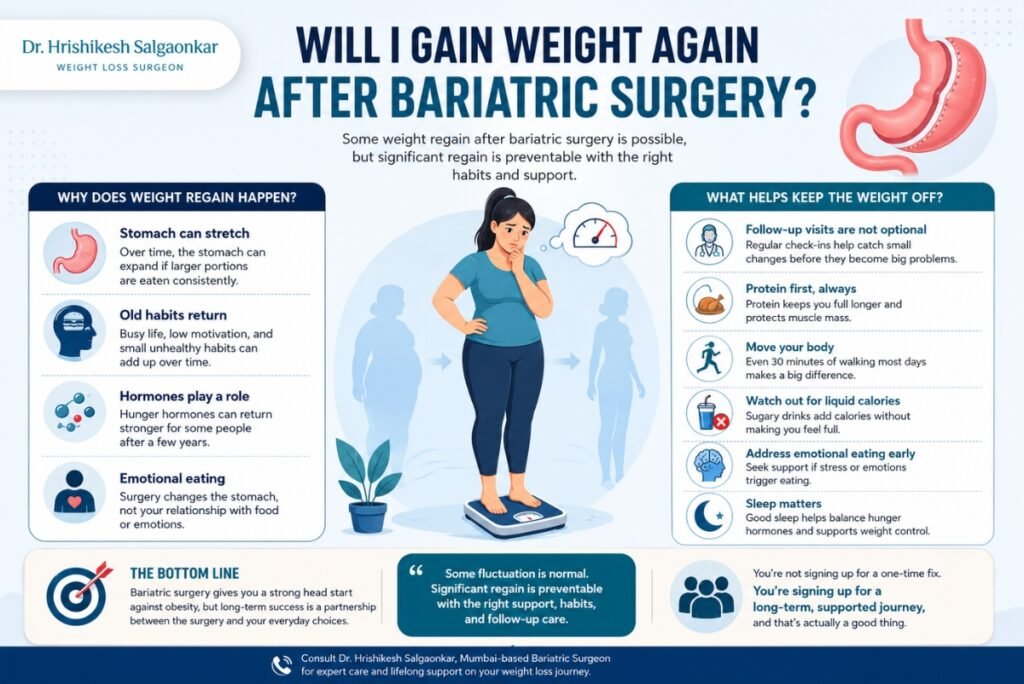
Will I Gain Weight Again After Bariatric Surgery?
Introduction
If you’re considering bariatric surgery, or you’ve already had it, this question has probably crossed your mind at 2 AM more than once. “What if I lose all this weight and then… gain it back?”
It’s a fair worry. And honestly, it deserves an honest answer.
First, the Honest Truth
Yes, some weight regain after bariatric surgery is possible. It happens to some people, not all.
But here’s what most people don’t tell you: a little bit of weight regain in the years after surgery is actually normal; your body isn’t a machine that stays frozen at one number forever. The real question isn’t “Will I gain any weight back?” it’s “Will I gain back so much that surgery stops helping me?”
That’s a very different question, and the answer depends a lot on what you do after the surgery, not just the surgery itself.
Why Does Weight Regain Happen?
There isn’t one single reason. Usually, it’s a mix of things:
- The stomach can stretch a little over time: After a Sleeve Gastrectomy (where a large part of the stomach is removed to make it smaller), the remaining stomach can gradually expand if you consistently eat larger portions. Think of it like a balloon: stretch it enough times, and it doesn’t snap back as tightly.
- Old habits creep back in: The first year after surgery, most people are extremely disciplined. Over time, life gets busy, motivation dips, and small habits, a little more sugar here, skipping a workout there, quietly add up.
- Hormones play a role too: Your body has hunger hormones that influence how full or hungry you feel. Surgery changes these hormones initially, but for some people, hunger signals can return stronger than expected after a few years.
- Emotional eating doesn’t disappear with surgery: Surgery changes your stomach, not necessarily your relationship with food. If food was a stress-reliever before, it can quietly become one again.
None of this means surgery “failed.” It simply means the body and mind need continued support, not just for six months, but for years.
What Actually Helps Keep the Weight Off?
This is the part that matters most, so let’s break it down practically.
- Follow-up visits are not optional: Regular check-ins with your bariatric surgeon or weight loss surgeon help catch small changes before they become big ones. Many patients skip follow-ups once they feel “fine,” and that’s usually when regain quietly begins.
- Protein first, always: Protein keeps you full longer and protects muscle mass. A simple habit, starting meals with protein, makes a bigger difference than most people expect.
- Move your body, don’t just diet: You don’t need an intense gym routine. Even 30 minutes of walking, most days, helps maintain the results of surgery far better than diet changes alone.
- Watch out for “liquid calories: Juices, sweetened tea, chai with extra sugar, cold drinks; these sneak in a surprising number of calories without making you feel full.
- Address emotional eating early: If stress, boredom, or sadness triggers eating, it’s worth talking to a counsellor or your surgical team. This isn’t a weakness; it’s simply part of taking care of yourself fully.
- Sleep matters more than people think: Poor sleep affects hunger hormones directly. Fixing sleep is often an underrated, powerful tool for weight maintenance.
Is Weight Regain a Sign the Surgery Didn't Work?
Not necessarily. Obesity is a long-term condition, not a one-time problem that surgery erases forever. Bariatric surgery, whether it’s Sleeve Gastrectomy or another procedure, is a powerful tool, not a permanent fix on autopilot.
Dr. Hrishikesh Salgaonkar, a Mumbai-based Bariatric Surgeon, most patients who stay in touch with their surgical team, follow dietary guidance, and stay physically active manage their weight successfully for years after surgery. The patients who struggle the most are usually the ones who quietly stop following up.
If you do notice weight creeping back, the smartest move is not to panic or hide it; it’s to speak to your weight loss surgeon early. Small corrections early on are far easier than trying to fix a bigger problem later.
The Bottom Line
Bariatric surgery gives you a strong head start against obesity, but long-term success is a partnership between the surgery and your everyday choices. Some fluctuation is normal. Significant regain is preventable with the right support, habits, and follow-up care.
You’re not signing up for a one-time fix. You’re signing up for a long-term, supported journey, and that’s actually a good thing.