
Spigelian Hernia Surgery in Mumbai, India

What Is a Spigelian Hernia?
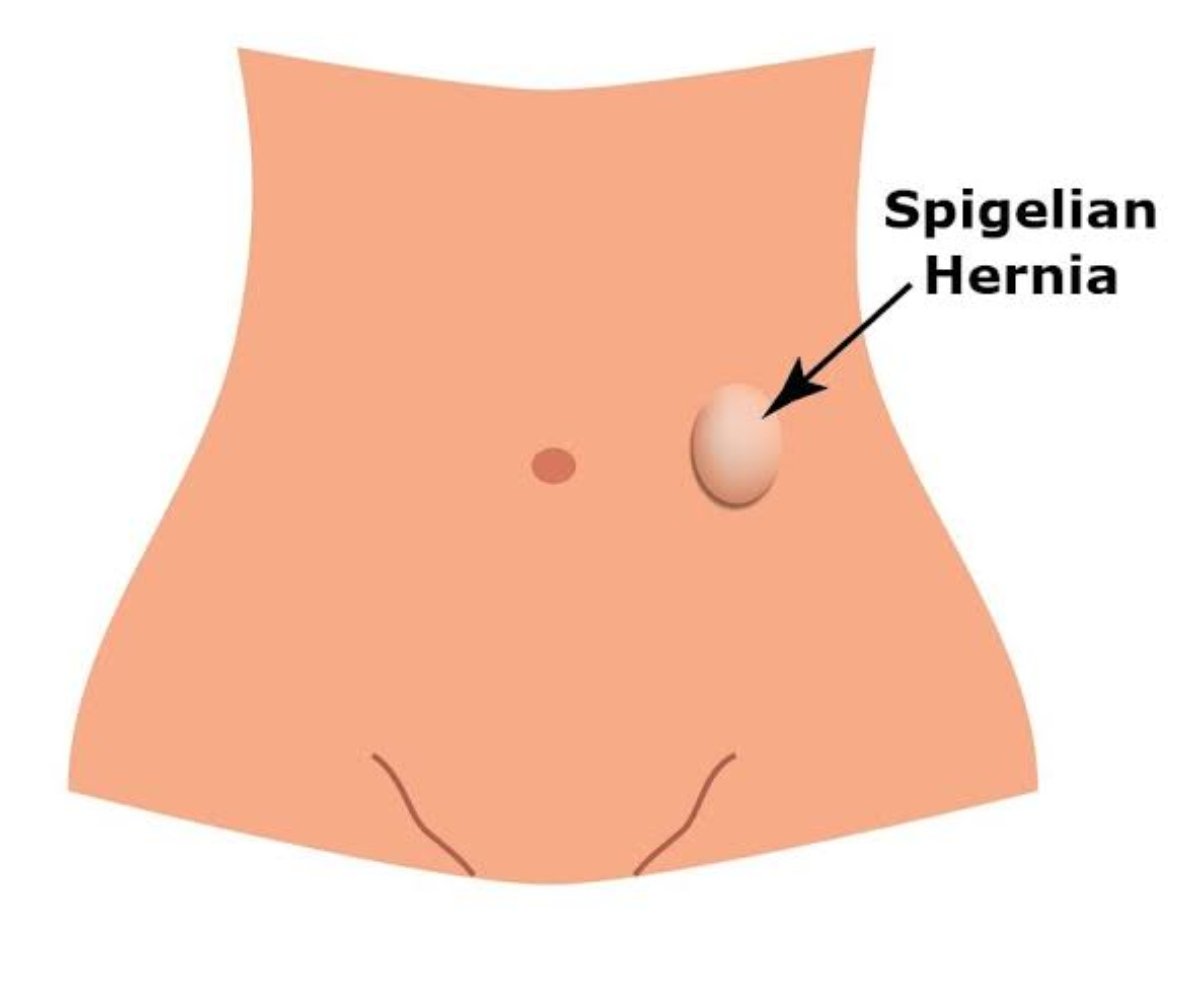
A Spigelian hernia is a type of abdominal wall hernia that develops due to weakness in the Spigelian fascia, located near the outer edge of the abdominal muscles.
Through this weakness, fatty tissue or part of the intestine may push between the abdominal muscle layers. Unlike other hernias, a Spigelian hernia may not cause a visible bulge because the outer muscle layer often remains intact.
It can develop gradually, causing occasional abdominal discomfort, or appear suddenly if the hernia contents become trapped
What Are the Common Symptoms of a Spigelian Hernia?
Symptoms of a Spigelian hernia depend on the size of the defect and the tissues involved. Some patients notice a small lump, while others experience abdominal pain without visible swelling. Common symptoms include:

What Causes a Spigelian Hernia?
A Spigelian hernia develops when the tissues forming the abdominal wall become weak or develop a defect. This allows fatty tissue or abdominal contents to push through the weakened area. Several factors may contribute to the development of this condition:
- Age-Related Muscle Weakness: The abdominal wall may become weaker with age, increasing the possibility of hernia formation.
- Obesity: Excess body weight can increase pressure inside the abdomen and place additional stress on the abdominal wall.
- Chronic Coughing: Repeated coughing can increase intra-abdominal pressure and contribute to weakness in the abdominal muscles.
- Heavy Lifting: Repeated heavy lifting or activities involving significant abdominal strain may contribute to hernia formation.
- Previous Abdominal Surgery: Surgical incisions may affect the strength of the abdominal wall and contribute to hernia development in some patients.
- Chronic Constipation: Repeated straining during bowel movements can increase pressure inside the abdomen.
- Pregnancy: Changes in abdominal pressure and stretching of the abdominal wall may contribute to the development of abdominal hernias.
A Spigelian hernia may develop due to a combination of factors. However, some patients do not have an identifiable risk factor.
How Is a Spigelian Hernia Diagnosed?
Diagnosing a Spigelian hernia can be difficult because the bulge may remain hidden beneath the abdominal muscles. Doctors assess the patient’s symptoms, medical history and physical examination findings before recommending imaging tests.
Physical Examination
The doctor checks the abdominal wall for tenderness, swelling or a possible hernia. Coughing or straining may help make the hernia more noticeable.
Abdominal Ultrasound
Ultrasound uses sound waves to examine the abdominal wall and identify the hernia, its size and contents. Dynamic ultrasound may be performed during standing or straining.
CT Scan
A CT scan provides detailed images of the abdominal wall and helps identify the hernia’s location, size, contents and possible complications.
MRI
MRI may be recommended when further assessment is needed or other imaging tests do not provide a clear diagnosis. It helps confirm the hernia and plan suitable treatment.
What Are the Treatment Options for a Spigelian Hernia?
Surgical repair is generally recommended for Spigelian hernias due to the risk of incarceration, where the hernia contents become trapped. If blood supply is affected, it can lead to strangulation and require emergency surgery. The choice of procedure depends on the hernia’s size, location, contents, the patient’s overall health and the surgeon’s assessment.
Laparoscopic Spigelian Hernia Repair
Laparoscopic repair is a minimally invasive procedure performed through small abdominal incisions. The surgeon uses a camera and specialised instruments to locate the hernia and return the protruding tissue to its normal position. The weakened abdominal wall is then repaired, often using surgical mesh to provide additional strength and reduce the risk of recurrence.
Open Spigelian Hernia Repair
Open repair involves making an incision over the affected area to access the hernia directly. The surgeon returns the protruding tissue to the abdominal cavity and repairs the weakened abdominal wall. Surgical mesh may be used to strengthen the repair. This approach may be preferred for larger or more complex hernias.
Mesh Repair
Mesh repair involves placing a surgical mesh over or behind the hernia defect to strengthen the weakened abdominal wall. It provides additional support and helps reduce the possibility of recurrence. The mesh placement technique depends on the hernia's size, location, surgical approach and the patient's overall condition
Emergency Hernia Surgery
Emergency surgery may be required if the hernia becomes incarcerated or strangulated. The surgeon releases the trapped tissue and checks its blood supply. If part of the intestine is severely damaged, that section may need to be removed. The abdominal wall is then repaired based on the presence of infection, contamination and other surgical findings
When Is Spigelian Hernia Surgery Needed?
Surgical repair is generally recommended for a diagnosed Spigelian hernia due to the risk of incarceration and strangulation. Unlike some other hernias, simple observation is usually not preferred. Surgery may be advised in the following situations:
- Confirmed Spigelian hernia, even with mild symptoms.
- Persistent abdominal pain or discomfort.
- Hernia becoming more noticeable during physical activity.
- Increasing swelling or tenderness around the affected area.
- Hernia containing fatty tissue or part of the intestine.
- Signs of bowel obstruction or suspected strangulation requiring emergency treatment.

Why Choose Dr. Hrishikesh for Spigelian Hernia Surgery?
Dr. Hrishikesh Salgaonkar is a Consultant Surgeon specialising in gastrointestinal, bariatric, robotic and minimally invasive surgery. His qualifications include DNB in General Surgery, Fellowship in Minimal Access Surgery, MRCS England and advanced fellowships in gastrointestinal and bariatric surgery. He has also completed specialised surgical training in Singapore and the United Kingdom.
His clinical experience includes abdominal wall hernia repairs and minimally invasive procedures. He evaluates the location and size of the Spigelian hernia, patient symptoms and imaging findings to discuss suitable treatment options, including laparoscopic or open repair based on individual needs
Frequently Asked Questions About Achalasia Cardia
Can a Spigelian hernia be treated without surgery?
Surgical repair is generally recommended because of the risk of incarceration and strangulation. Support garments or medicines do not correct the abdominal wall defect.
How long does recovery take after Spigelian hernia surgery?
Recovery varies depending on whether the surgery is laparoscopic or open, the size of the hernia, and the patient’s general health. The surgeon provides instructions regarding activity, wound care, and return to normal routines.
How is a Spigelian hernia diagnosed?
Diagnosis involves a physical examination and imaging tests such as abdominal ultrasound or CT scan. These investigations help identify the hernia defect and determine what tissue is passing through it.
Is laparoscopic surgery used for Spigelian hernia repair?
Yes. Laparoscopic surgery is one of the established approaches. It involves small incisions through which the surgeon repairs the hernia, often using surgical mesh to strengthen the abdominal wall.
Is mesh necessary for Spigelian hernia surgery?
Mesh is commonly recommended to reinforce the weakened abdominal wall and reduce the risk of recurrence. However, the decision depends on the size of the hernia, surgical findings, and the patient’s condition.
Can a Spigelian hernia cause bowel obstruction?
Yes. If a portion of the intestine becomes trapped inside the hernia, it can obstruct the normal passage of intestinal contents. Severe pain, vomiting, and abdominal swelling require urgent medical attention.