
Achalasia Cardia Surgery in Mumbai, India
What Is Achalasia Cardia?
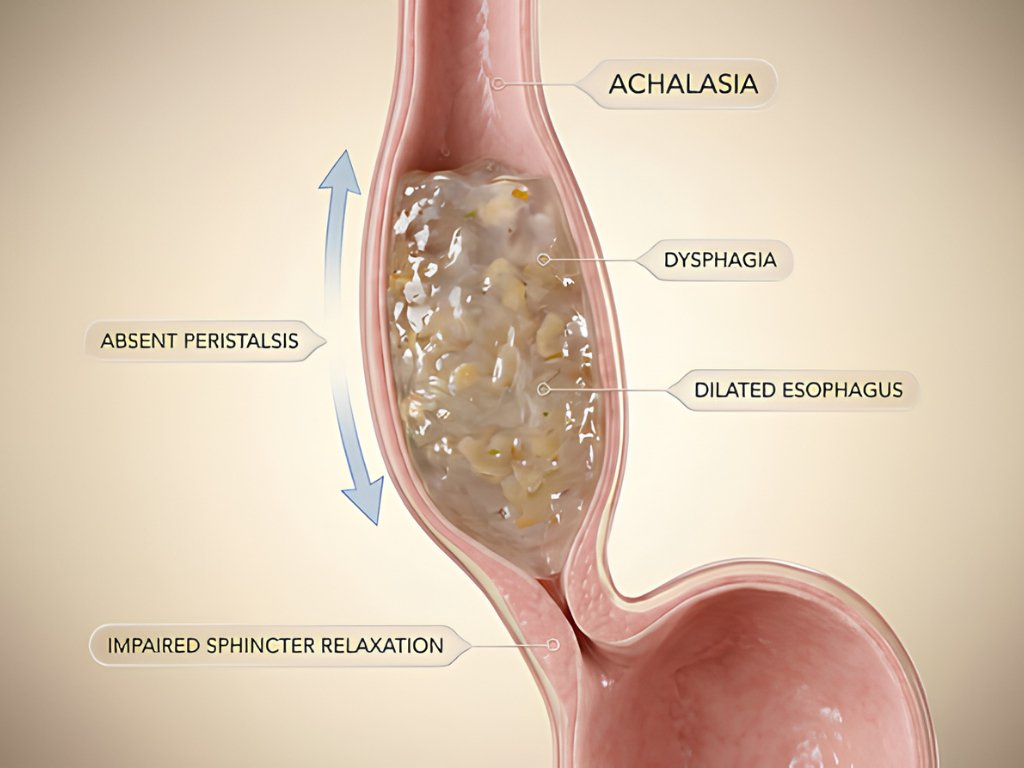
Achalasia cardia is a condition in which the lower oesophageal sphincter (LES) does not relax properly during swallowing. The normal muscle movements that push food towards the stomach also become weak or absent.
As a result, food and liquids may collect in the oesophagus, making swallowing difficult. The exact cause is not fully known, but the condition is linked to damage to the nerves that control oesophageal muscles. It usually develops gradually and can affect adults of different age groups.
What Are the Common Symptoms of Achalasia Cardia?
Symptoms of achalasia cardia may develop slowly, making them hard to recognise early on. Some people initially mistake them for acidity or other digestive problems. Common symptoms include:
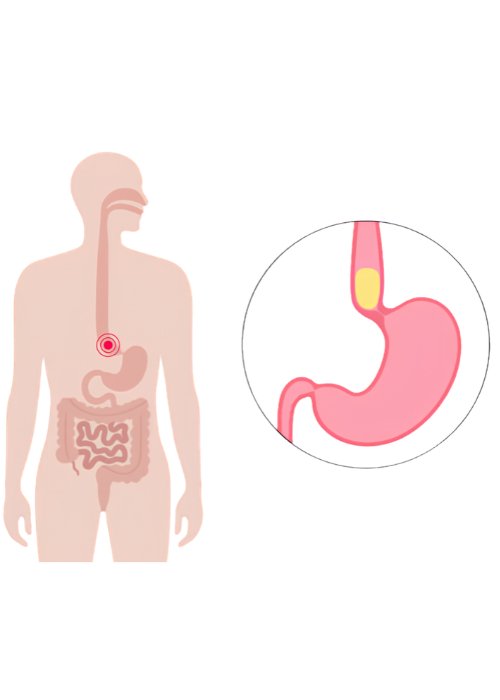
Achalasia is generally associated with the loss or damage of nerve cells in the oesophagus that coordinate swallowing and muscle contractions.
Although the exact reason for this nerve damage is not established in most cases, it affects two important functions:
- The oesophageal muscles lose their normal coordinated movements.
- The lower oesophageal sphincter does not relax adequately when food passes towards the stomach.
This combination makes swallowing difficult and can cause food to remain in the oesophagus for longer than normal. Achalasia is not the same as ordinary acid reflux, and it is not usually caused by eating habits or lifestyle choices.
How Is Achalasia Cardia Diagnosed?
Accurate diagnosis is important because several other conditions can cause similar swallowing difficulties. A doctor may recommend a combination of investigations to understand how the oesophagus is functioning.
Upper GI Endoscopy
An upper gastrointestinal endoscopy allows the doctor to examine the oesophagus and stomach using a flexible camera. It helps identify retained food, oesophageal dilatation, inflammation, or narrowing and helps rule out other conditions that may produce similar symptoms.
Oesophageal Manometry
High-resolution oesophageal manometry is an important test for confirming achalasia. A thin tube with pressure sensors measures the muscle contractions and relaxation of the lower oesophageal sphincter during swallowing.
Barium Swallow Test
During this investigation, the patient drinks a contrast liquid while X-ray images are taken. The images help assess how the liquid moves through the oesophagus and whether it collects above the lower oesophageal sphincter. These investigations help establish the diagnosis and guide treatment planning.
What Are the Treatment Options for Achalasia Cardia?
Treatment of achalasia cardia aims to help food pass easily from the oesophagus into the stomach by relaxing the lower oesophageal sphincter. The suitable treatment depends on symptom severity, overall health, previous treatments and individual clinical findings.
Pneumatic Balloon Dilatation
An endoscopic procedure in which a specialised balloon is inflated across the lower oesophageal sphincter to stretch the tight muscle fibres and improve swallowing. Repeat treatment may be required, and there is a risk of oesophageal perforation.
Laparoscopic Heller Myotomy
A minimally invasive surgical procedure in which the surgeon divides the muscle fibres of the lower oesophageal sphincter through small abdominal incisions. A partial fundoplication may also be performed to reduce the risk of acid reflux.
Peroral Endoscopic Myotomy (POEM)
An endoscopic procedure performed through the mouth without external incisions. A tunnel is created within the oesophageal wall, allowing the surgeon to divide the abnormal muscle fibres. It is particularly useful in selected patients with Type III achalasia.
Botulinum Toxin Injection
Botulinum toxin is injected into the lower oesophageal sphincter during endoscopy to temporarily relax the muscle. It is generally considered for patients who are unsuitable for more definitive treatments.
When Is Surgery Needed for Achalasia Cardia?
Treatment decisions are based on symptoms, investigation results, and the patient’s overall health. Surgery or an endoscopic myotomy may be considered when swallowing difficulties significantly affect daily life or when a more definitive treatment is appropriate.
The choice between laparoscopic Heller myotomy, POEM, and pneumatic dilatation requires an assessment of the achalasia subtype, expected benefits, potential complications, and patient preferences.
A consultation with an upper gastrointestinal surgeon in Mumbai, India can help patients understand the available options and make an informed decision.


Why Choose Dr. Hrishikesh Salgaonkar For Achalasia Cardia Surgery?
Dr. Hrishikesh Salgaonkar is a Consultant Surgeon with expertise in gastrointestinal, bariatric, robotic and minimally invasive surgery. His professional training includes a Fellowship in Advanced GI Minimally Invasive Surgery in Singapore, Membership of the Royal College of Surgeons of England, and a Fellowship in Oesophagogastric Surgery.
His experience in gastrointestinal and oesophageal surgery supports the evaluation and treatment of conditions such as achalasia cardia. He assesses each patient’s symptoms, diagnostic reports and overall health to discuss suitable treatment options, including Heller’s cardiomyotomy when indicated.
Frequently Asked Questions About Achalasia Cardia
Is achalasia cardia a serious condition?
Achalasia is a chronic oesophageal disorder that can affect swallowing and food intake. If not appropriately managed, it may lead to significant oesophageal dilatation, nutritional problems, and respiratory complications related to regurgitation.
Can achalasia return after treatment?
Symptoms can persist or return after treatment in some patients. This may happen due to incomplete muscle division, recurrent obstruction, or other oesophageal problems. Further assessment helps determine whether additional treatment is required.
Does achalasia cardia cause weight loss?
Yes. Difficulty swallowing can reduce food intake and make eating uncomfortable. Some patients may experience unintended weight loss and nutritional deficiencies, particularly when symptoms continue for a prolonged period.
How long does achalasia cardia surgery take?
The duration depends on the procedure, the severity of the condition, and individual clinical factors. Laparoscopic Heller myotomy and POEM have different procedural requirements. The treating specialist can provide an estimated duration after evaluating the patient.
Can achalasia cardia be treated without surgery?
Some patients may be suitable for pneumatic balloon dilatation or botulinum toxin injection. However, the appropriate treatment depends on the type of achalasia, symptoms, and overall health. POEM and laparoscopic Heller myotomy are other treatment options.
Which surgery is used for achalasia cardia?
Laparoscopic Heller myotomy is an established surgical treatment. POEM is an endoscopic myotomy option. The choice depends on the achalasia subtype, clinical findings, available expertise, and patient preference.
What happens if achalasia cardia is left untreated?
If achalasia cardia is left untreated, difficulty swallowing may gradually worsen. Food and liquids can accumulate in the oesophagus, leading to oesophageal dilatation, nutritional deficiencies, weight loss, and regurgitation. In some patients, regurgitation may also increase the risk of respiratory complications.
Is achalasia cardia surgery painful?
Achalasia surgery is generally performed under general anaesthesia, so patients do not experience pain during the procedure. Some discomfort may occur during recovery, depending on the treatment performed. The medical team provides appropriate pain management and post-procedure care.